How to Use a Whipped Cream Dispenser Without a Charger
Post time:2026-10-23
Ran out of whipped cream chargers mid-recipe and need a topping now? The honest answer up front: a standard cream dispenser cannot produce its signature pressurized foam without a whipped cream charger, because the charger supplies the nitrous oxide (N2O) gas that dissolves into the cream and expands into fine bubbles when the lever opens. That said, you can still use the canister as a chilled piping vessel, or whip cream by hand separately. This guide explains what the charger does, what genuinely works without one, and what to avoid.
Content
Hide
What a Whipped Cream Charger Actually Does
A whipped cream charger is a small sealed N2O cartridge that, once punctured inside the dispenser head, releases gas into the cold cream. Shaking the canister mixes the gas through the liquid; under pressure, N2O stays dissolved. When you press the lever, pressure drops at the nozzle, the dissolved gas expands, and the fat network of the cream traps thousands of tiny bubbles into a stable, billowy foam that pipes in a clean ribbon.
Remove the whipped cream charger from that chain and nothing pressurizes the canister: there is no dissolved gas to expand, so the lever cannot push out aerated foam. The dispenser without gas behaves like a sealed metal bottle, not a whipping machine. Any "no-charger" result comes from air you introduced yourself, not from the canister.
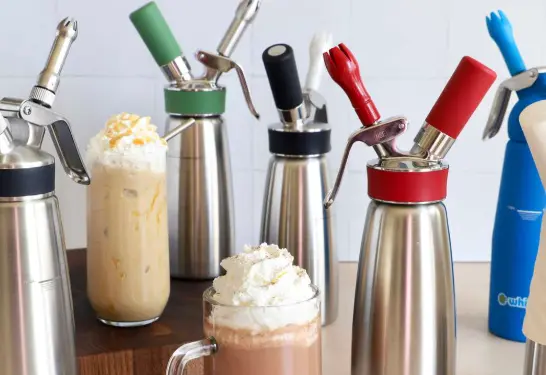
Method 1: Hand-Whip First, Use the Canister as a Piping Bag
The most practical workaround is to whip the cream outside the dispenser, then transfer it into the chilled canister and pipe by hand.
- Chill the canister, bowl and whisk for at least 15 minutes; cream works best at refrigerator temperature.
- Use heavy whipping cream with roughly 35–38% fat; lower-fat cream will not hold peaks.
- Whip by hand or with a mixer to soft peaks — stop before it turns grainy or buttery.
- Fill the canister no more than two-thirds full; do not attach a charger.
- Screw the head on securely, hold the canister horizontally or upright as your piping style requires, and press the lever slowly and steadily, exactly like squeezing a piping bag.
- Serve within a few minutes, because hand-whipped foam begins to deflate as it warms.
Expect a softer, less defined ribbon than charger-made cream, and refill only what you will use immediately.
Method 2: Chilled-Jar Shake Without the Dispenser at All
When the canister is not essential, make the cream in a lidded chilled jar: pour cold heavy cream, add sweetener and vanilla if desired, seal tightly, and shake hard for several minutes until soft peaks form. Agitation forces air bubbles into the fat network the same way a whisk does, though the result is less voluminous than charger foam and should be used right away. This method needs no whipped cream charger, no canister and no mixer — just a cold jar, cold cream and arm energy.
What You Should Not Try Without a Charger
- Do not shake the empty canister expecting foam. Mechanical shaking inside an open, unpressurized canister cannot dissolve gas into cream; you will mostly slosh liquid.
- Do not substitute other gas. Only food-grade N2O chargers are designed for this dispenser; using unrelated gas sources changes flavor, chemistry and pressure behavior and creates a safety hazard.
- Do not overfill. Even without a charger, filling past two-thirds leaves no headspace and makes manual dispensing uneven.
- Do not force the valve or modify the head. The sealing system and needle are calibrated for the charger; tampering can release pressure unexpectedly.
Why the Charger Method Still Wins
Once a whipped cream charger is available, the standard sequence is simple: chill cream, fill to the two-thirds mark, charge with one N2O cartridge, shake briefly to distribute the gas, rest cold, then dispense on demand. The gas stays dissolved under pressure, so batches pipe smoothly through multiple servings and hold their shape far longer than hand-whipped cream. For café, dessert-station or repeated topping use, that consistency is the reason chargers remain the professional default.
Compatibility and Storage Tips
- Keep cream, canister and nozzle cold throughout; warmth flattens foam quickly.
- After charging, store the loaded canister upright in the refrigerator and use within the manufacturer's recommended window.
- Clean the nozzle and head after each use; residual cream fat turns rancid if left overnight.
- Keep spare whipped cream chargers on hand so a recipe never pauses for a missing cartridge.
FAQ
Can I use my whipped cream dispenser without a charger at all?
You can use it as a manual piping vessel filled with pre-whipped cream, but it will not produce pressurized charger foam on its own.
What happens if I just shake the dispenser without a charger?
You slosh liquid cream; without dissolved N2O, opening the lever releases no aerated foam.
Can I whip cream in the canister by hand instead of a bowl?
Air incorporation inside a sealed narrow canister is inefficient; whipping in a chilled bowl or jar first gives far better peaks.
Why does charger whipped cream last longer?
Dissolved N2O under pressure creates a stable microbubble network that hand aeration cannot match, so ribbons hold shape through multiple servings.
What fat content do I need for the no-charger method?
Use heavy whipping cream around 35–38% fat; lighter creams will not hold soft peaks.
Conclusion
A whipped cream dispenser without a whipped cream charger cannot make pressurized foam, but it still works as a cold piping bag when the cream is whipped first, and the chilled-jar shake method covers emergencies entirely outside the canister. For consistent, restaurant-style ribbons on demand, keep food-grade N2O chargers stocked and follow the charge-shake-chill-dispense routine.
Browse dispenser-friendly cream supplies and chargers, and ask the FurryCream team for setup advice: visit FurryCream — https://www.furrycream.com/

-
 Hangzhou Luire Technology Co., Ltd.
-
 ROOM 2805 JINZUN TOWER OF ZUNBAO,HANGZHOU,CHINA
-

-

-